
project overview
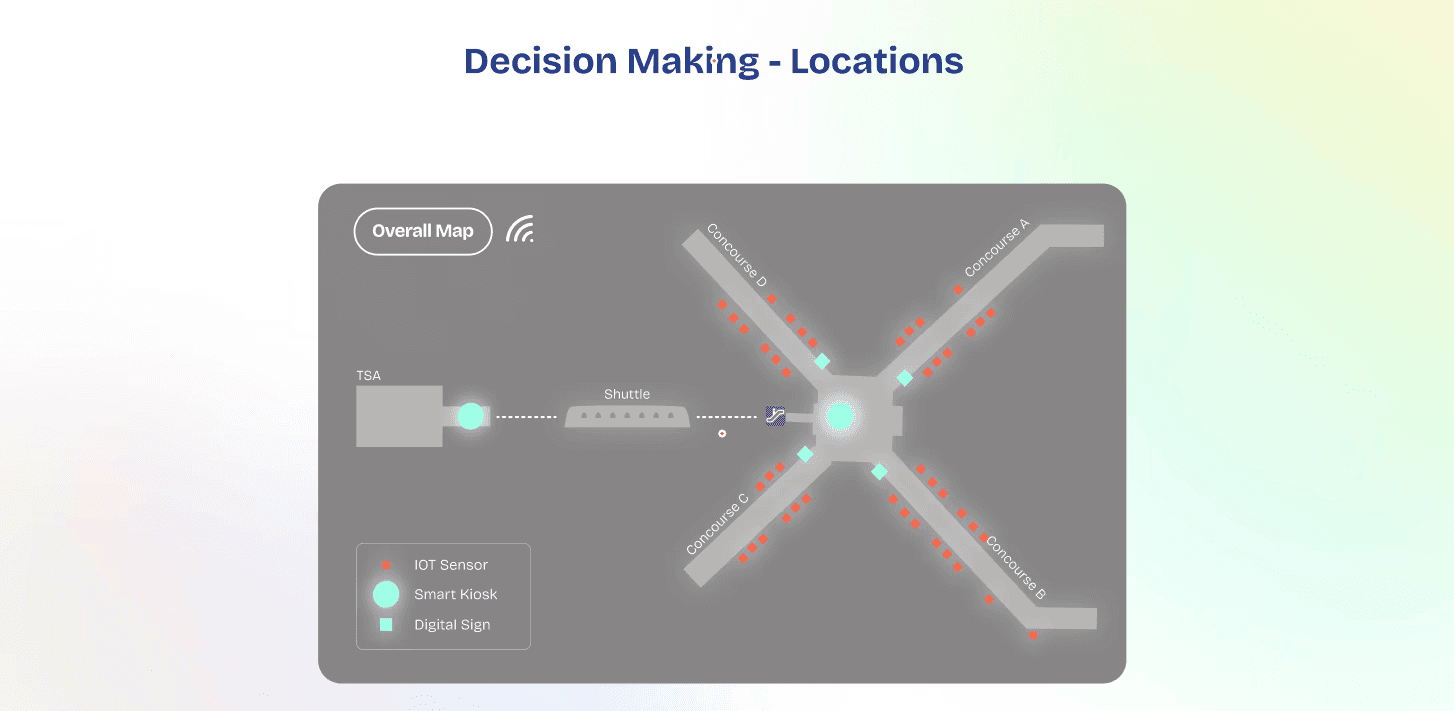
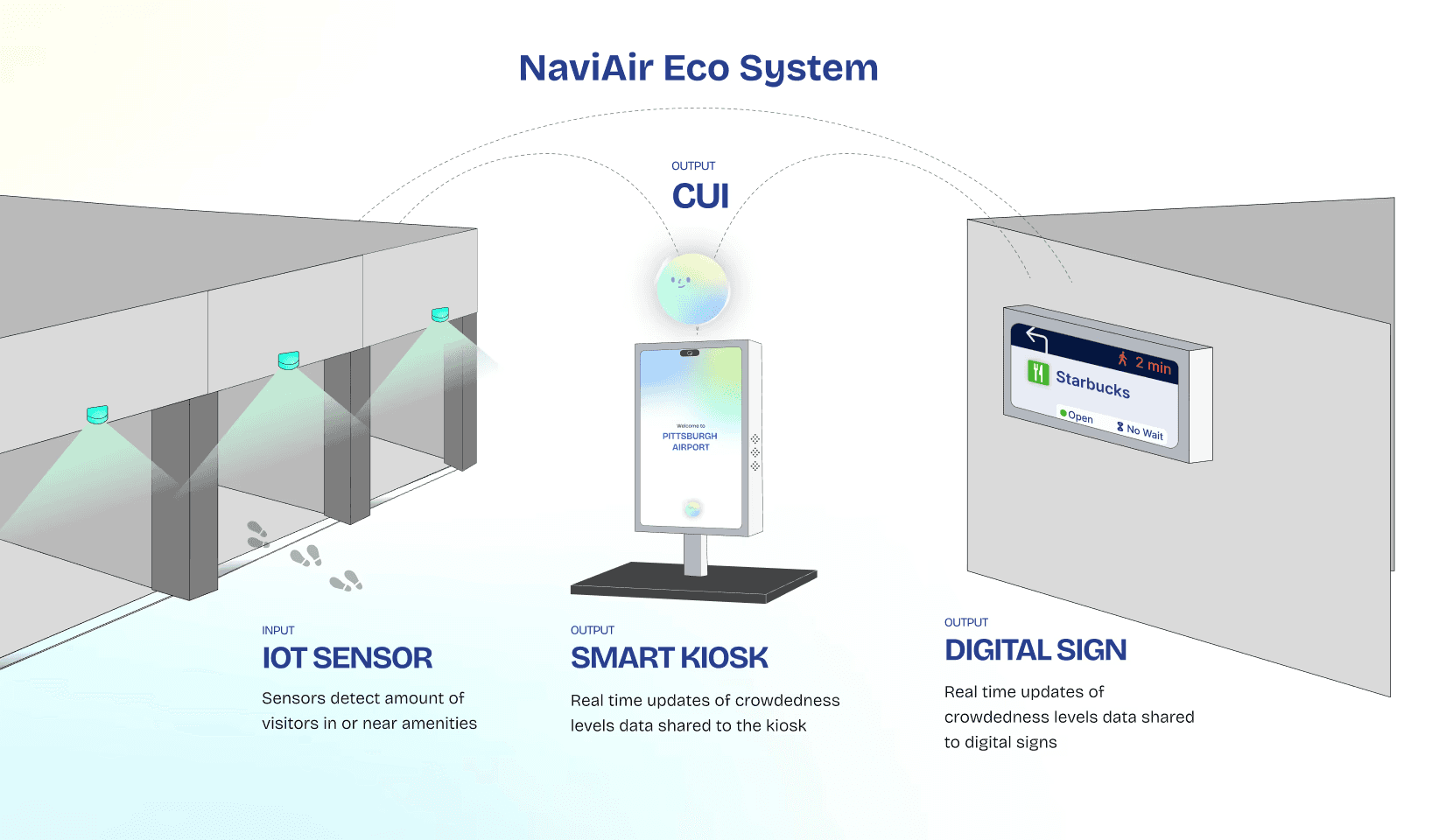
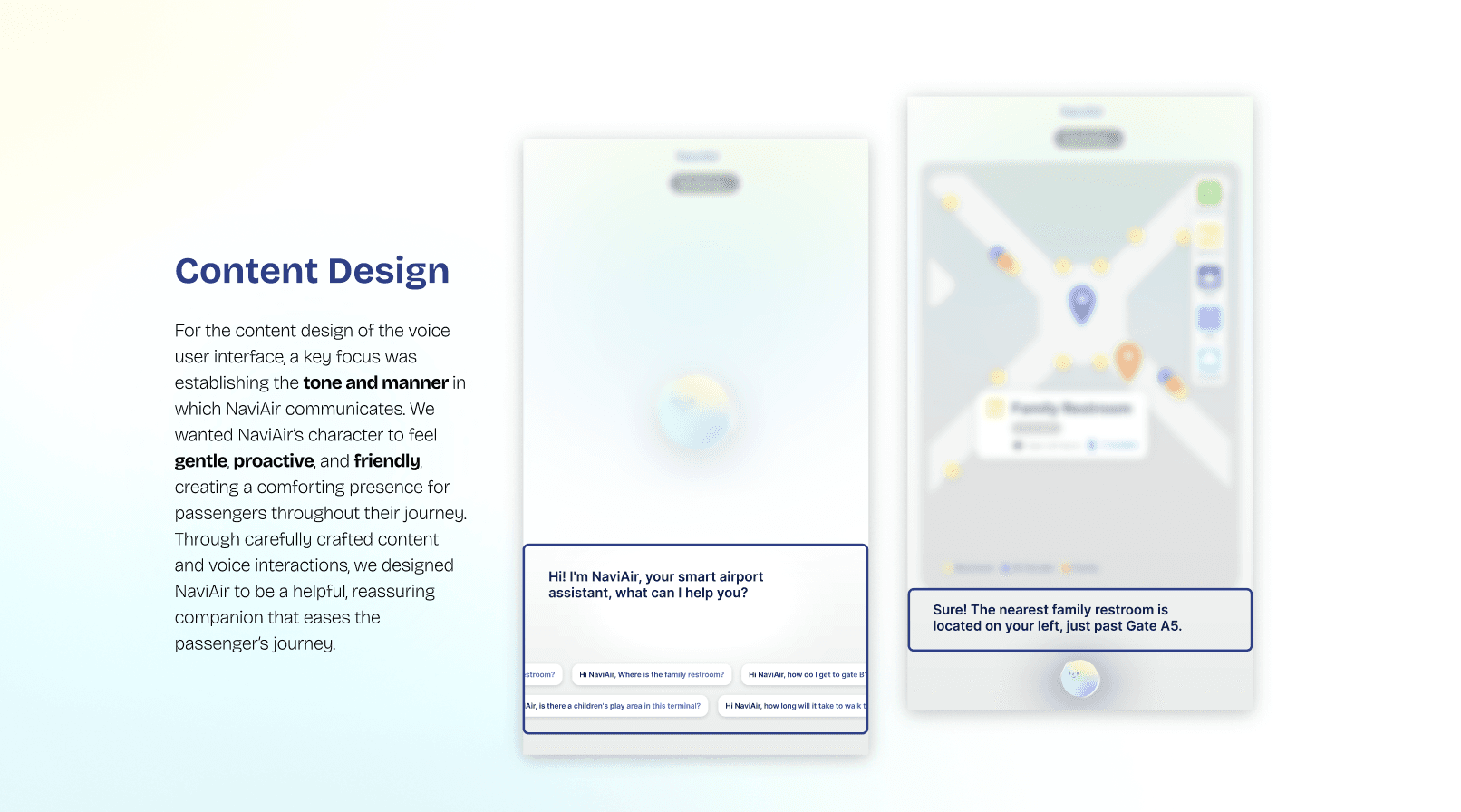
Designed for caregivers traveling through Pittsburgh International Airport. This speculative project incorporates 5G, IoT, and Conversational UI (CUI) technologies to create a more seamless experience in the concourse area.
project type
The future navigation of Pittsburgh International Airport
year
2025
my role
ux designer and researcher
Define Target Audience
One of the main focuses of this project is accessibility — we should not only address pain points for the general public but also consider the needs of diverse demographics.
To deepen our understanding of diverse accessibility needs, we consulted Microsoft’s Inclusive Toolkit Manual, examining challenges related to vision, hearing, speech, and mobility.
Considering that Pittsburgh International Airport is heavily used by families and international students, we identified mobility as a key area to prioritize—particularly to support caregivers who often navigate the space with both hands occupied while attending to young children.



Visibility disability
Those who are visually impaired or temporarily experiencing limited vision.
blind
cataract
distracted driver


Mobility disability
The most common disability in the United States, reported by approximately 1 in 7 adults.
one arm
arm injury
new parent


Deaf / Nonverbal
Communicate primarily through sign language, writing, or assistive technology.
non-verbal
ear infection
bartender
User Interviews
Going in-depth, we planned a series of user interviews to gather pain points experienced at airports from our target users.
We reached out to five parents, each of whom either currently travels with or recalls traveling with their young child(ren) at the airport. To ensure we covered the areas we wanted to validate, we outlined key topics in the interview protocol:
User Background
Travel Context
Experience Navigating the Airport
Thoughts on Airport Amenities & Services
Access to Technology & Information
Emotional Flow: Managing Time & Stress
Future Improvements & Ideal Experience
After the talks, we consolidated the insights and synthesized with our initial desktop research, gaining a clearer picture of the main problem to solve.


Key Pain Points
01 Managing Physical Mobility
Strollers and equipment: Caregivers often travel with strollers, car seats, and multiple pieces of luggage, which can make navigating the airport cumbersome. Also, carrying babies makes it difficult for them to do other things with their hands.
Long distances: Long walking distances between gates can be particularly challenging for caregivers managing children and heavy equipment.
03 Lack of Family-Centered Amenities
Play Areas: While PIT offers a temporary Kidsport play area near Gate C56, families may benefit from more strategically located play zones to entertain children during layovers or delays.
Waiting Areas: Insufficient family-friendly seating areas near gates can make waiting periods uncomfortable for caregivers managing restless children.
02 Restroom Accessibility
Changing facilities: While PIT has installed height-adjustable adult-sized changing tables and sinks in family restrooms, the availability of these facilities may still be limited relative to demand.
Privacy needs: Restrooms designed with privacy and sufficient space for strollers are critical but may not always be conveniently located.
04 Navigation Difficulties
Signage and Wayfinding: Caregivers often struggle to locate family-focused amenities like nursing lounges, restrooms, or play areas due to unclear or insufficient signage.
Future Plan
Privacy Methods:
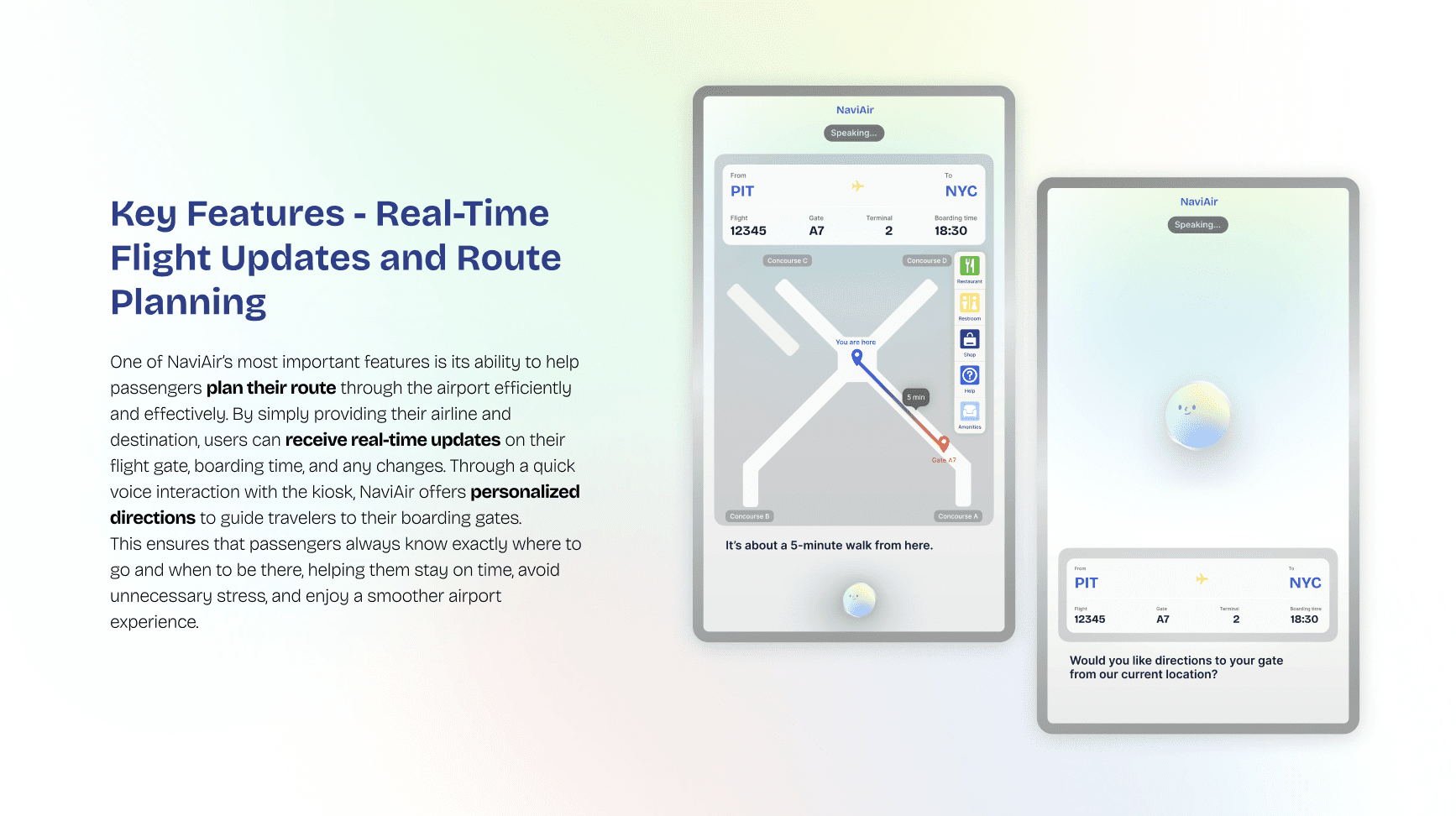
Currently, flight details are openly displayed on the kiosk screen, which may raise concerns for travelers who prefer to keep their information private. Future designs could explore solutions such as optional privacy screens, time-limited displays, or more discreet methods of showing sensitive information to maintain user confidence and comfort.
Expanding our Audience:
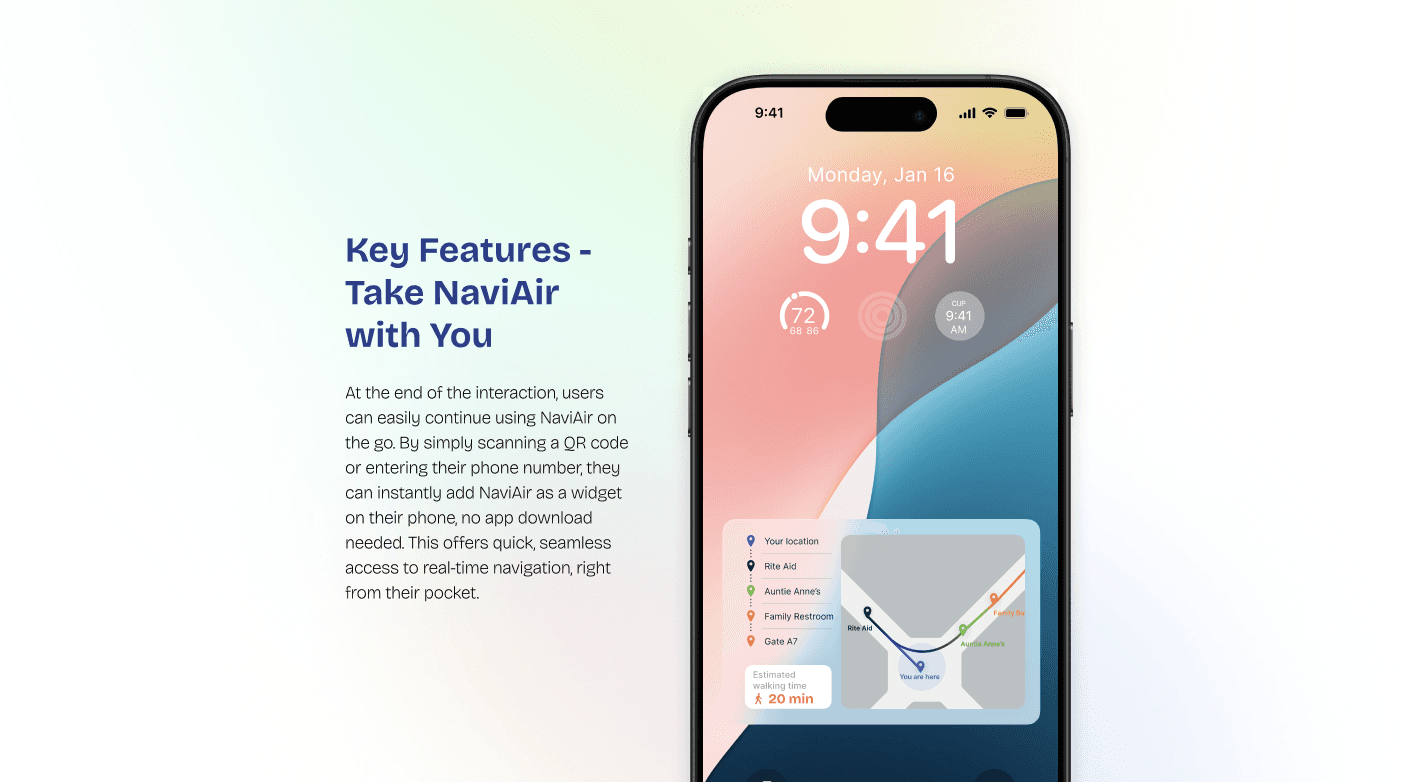
We currently have a lock screen widget as the only personalized way to carry one’s map route, but we hope to explore other interface options such as an app for the general public or other technological devices.
